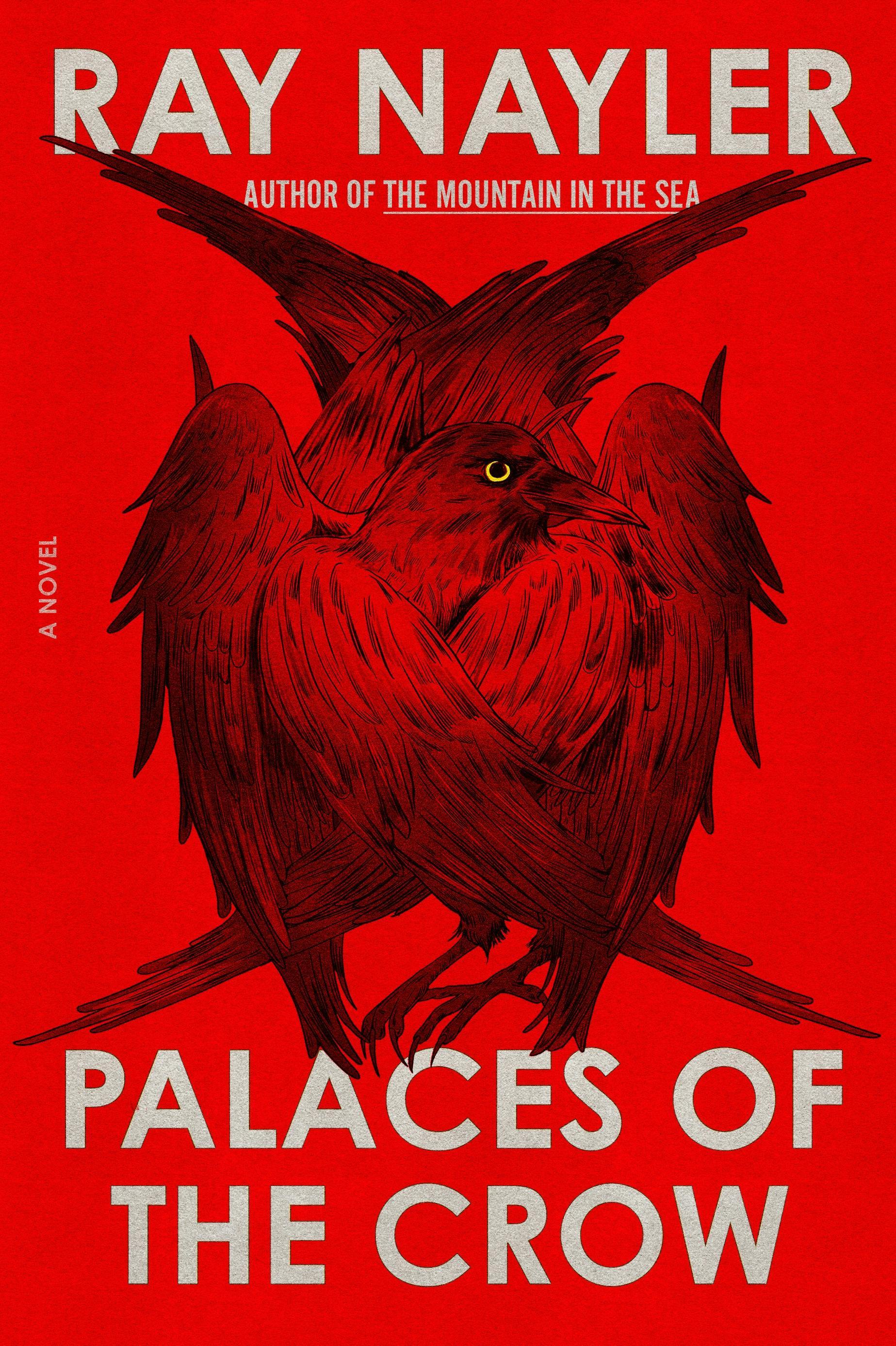
In Ray Nayler’s speculative novel of the recent past, four young teens caught between Nazis and the Red Army survive winter in the woods with the help of a flock of highly intelligent crows with a magnificent secret of their own to protect. This program is read by fan favorite and multi-award-winning narrator Eunice Wong.
“It takes just the right narrator to weave a story of the world ending. Eunice Wong proves up to the task in this fascinating audiobook.”—Locus on Where the Axe Is Buried
Neriya, a …
In Ray Nayler’s speculative novel of the recent past, four young teens caught between Nazis and the Red Army survive winter in the woods with the help of a flock of highly intelligent crows with a magnificent secret of their own to protect. This program is read by fan favorite and multi-award-winning narrator Eunice Wong.
“It takes just the right narrator to weave a story of the world ending. Eunice Wong proves up to the task in this fascinating audiobook.”—Locus on Where the Axe Is Buried
Neriya, a young Jewish girl who dreams of becoming a biologist, has befriended a local flock of crows in her shtetl. Czesław is an underage Polish soldier who deserts the Red Army and runs into the freezing Lithuanian woods. Kezia is a Roma horse trader whose family is on the run from Soviet collectivization. As the German blitzkrieg crashes across the border in June 1941, all three are caught up in the onslaught. Along with Innokentiy, an abandoned boy who cannot speak, they are driven into the primeval forest, where they survive by forming an unbreakable bond with one another—and with Neriya’s intelligent crows, who for years have been bringing her intricate gifts suggesting they are no ordinary corvids.
As the war goes on, the crows warn the children of danger and help them hide from the human threats of the forest—not only the Germans but also Russian deserters, Polish partisans, fascist Lithuanian police, and the other bandits and outcasts wandering the benighted landscape.
From the Ray Bradbury Prize and Arthur C. Clarke Award finalist, and Hugo and Locus Award winner, Ray Nayler, Palaces of the Crow blends history and haunting speculative wonder into a story of survival, loyalty and the fragile beauty of life in the darkest of times.
As WWII sweeps over then back, four young people band together in a forest on the eastern front in Nayler’s Palaces of the Crow. This is well told historical fiction with a hint of the supernatural. A story of death and survival. Excellent.
A fascinating tale of survival in the midst of a war, and what intelligent crows could create.
4 stars
A story of survival a war and the aftermath, when four children are driven into a forest in Lithuania to when Nazi Germany invades. Their survival is aided by a group of intelligent crows that warn them of danger and bring them gifts. But the biggest and most wonderful gift would be when the children get to see what the crows have done with their intelligence; and in return what the children can do for the crows.
The story starts with Neriya, a Jewish girl who becomes fascinated by a crow that likes to play and solve puzzles. This crow would then save the girl by leading her into the forest when war comes and engulfs her community. She is then joined by Czesław, an underage Polish boy in the Red Army who escapes into the forest when the Army is destroyed, and then by Kezia, a Roma girl, …
A story of survival a war and the aftermath, when four children are driven into a forest in Lithuania to when Nazi Germany invades. Their survival is aided by a group of intelligent crows that warn them of danger and bring them gifts. But the biggest and most wonderful gift would be when the children get to see what the crows have done with their intelligence; and in return what the children can do for the crows.
The story starts with Neriya, a Jewish girl who becomes fascinated by a crow that likes to play and solve puzzles. This crow would then save the girl by leading her into the forest when war comes and engulfs her community. She is then joined by Czesław, an underage Polish boy in the Red Army who escapes into the forest when the Army is destroyed, and then by Kezia, a Roma girl, and an unnamed boy who does not speak. All of them have seen what the Nazis, and resistance members, do to those who try to hide or resist them. It would need all of Czesław's hunting skills, Neriya's education in biology and plants, and Kezia and the boy's desire to learn new skills to keep them alive in the woods while war wages around them.
The crows would also help them, and is one puzzle that the children are eager to learn more about: their intelligence, and why they seem eager to help the children. The children would also discover scraps of writing that hint that they are not the first to discover the intelligence of the crows.
As the story progresses, the narrative also leaps into the future, after the war, when the children (now adults) meet again at the same forest to see what has happened to the crows. We also learn what happened to the children as the war starts to end, and the forest is no longer a safe hiding place for children. It is at this point that this reader began to notice discrepancies in the narrative, which are only resolved when a plot twist is revealed that would force this reader to reconsider the events that occur in the book. And it would show the resolve the grown children would have to protect what they know about the crows of the forest.
The story is light on SF, but gripping as it shows the children struggling to survive in the forest, and avoiding other groups of people that are also hiding in the forest, for whom any stranger is an enemy to be killed. But the worse may be those people who have gone feral and reverted to a state where survival is all-consuming. But the ending offers hope that, despite the horrors endured by the children, people can still recognise an extraordinary gift and seek to protect it.