
Xavier reviewed Le tour d'écrou by Henry James
Sainte fumée !
2 stars
Un prolétaire fantôme peut entraîner un jeune garçon de la gentry a prononcé des grossièretés et à se conduire d'une inconvenante façon ! Mettons-y bon ordre.
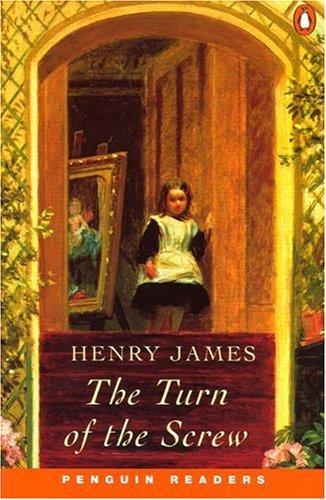
The Turn of the Screw is an 1898 gothic horror novella by Henry James which first appeared in serial format in Collier's Weekly from January 27 to April 16, 1898. On October 7, 1898, it was collected in The Two Magics, published by Macmillan in New York City and Heinemann in London. The novella follows a governess who, caring for two children at a remote country house, becomes convinced that they are haunted. The Turn of the Screw is considered a work of both Gothic and horror fiction. In the …
The Turn of the Screw is an 1898 gothic horror novella by Henry James which first appeared in serial format in Collier's Weekly from January 27 to April 16, 1898. On October 7, 1898, it was collected in The Two Magics, published by Macmillan in New York City and Heinemann in London. The novella follows a governess who, caring for two children at a remote country house, becomes convinced that they are haunted. The Turn of the Screw is considered a work of both Gothic and horror fiction.
In the century following its publication, critical analysis of the novella underwent several major transformations. Initial reviews regarded it only as a frightening ghost story, but, in the 1930s, some critics suggested that the supernatural elements were figments of the governess' imagination. In the early 1970s, the influence of structuralism resulted in an acknowledgement that the text's ambiguity was its key feature. Later approaches incorporated Marxist and feminist thinking, though the validity of these later approaches is disputed.
The novella has been adapted several times, including a Broadway play (1950), a chamber opera (1954), two films (in 1961 and 2020), and a miniseries (2020).
English language
Published 2000
Un prolétaire fantôme peut entraîner un jeune garçon de la gentry a prononcé des grossièretés et à se conduire d'une inconvenante façon ! Mettons-y bon ordre.
At the heart of this book, there's a good, simple ghost story in a creepy setting. It would work well as a short story, and Myfanwy Piper did a great job distilling that short story back out for the libretto of Britten's opera version. But the original text is so heavily larded with too many words--too many adjectives, just too much in general--as to ruin it for me. Some of this is the sheer wordiness, some is how slowly the story is drawn out, which was probably an artefact of having originally been published as a serial. But some is also how heavily the protagonist feels the need to imbue every step with Drama, to the point that when the ending comes it has no impact whatsoever because the piece has been blaring at fortississimo for an hour.
Seriously, the opera is a so much better telling of the …
At the heart of this book, there's a good, simple ghost story in a creepy setting. It would work well as a short story, and Myfanwy Piper did a great job distilling that short story back out for the libretto of Britten's opera version. But the original text is so heavily larded with too many words--too many adjectives, just too much in general--as to ruin it for me. Some of this is the sheer wordiness, some is how slowly the story is drawn out, which was probably an artefact of having originally been published as a serial. But some is also how heavily the protagonist feels the need to imbue every step with Drama, to the point that when the ending comes it has no impact whatsoever because the piece has been blaring at fortississimo for an hour.
Seriously, the opera is a so much better telling of the same story.