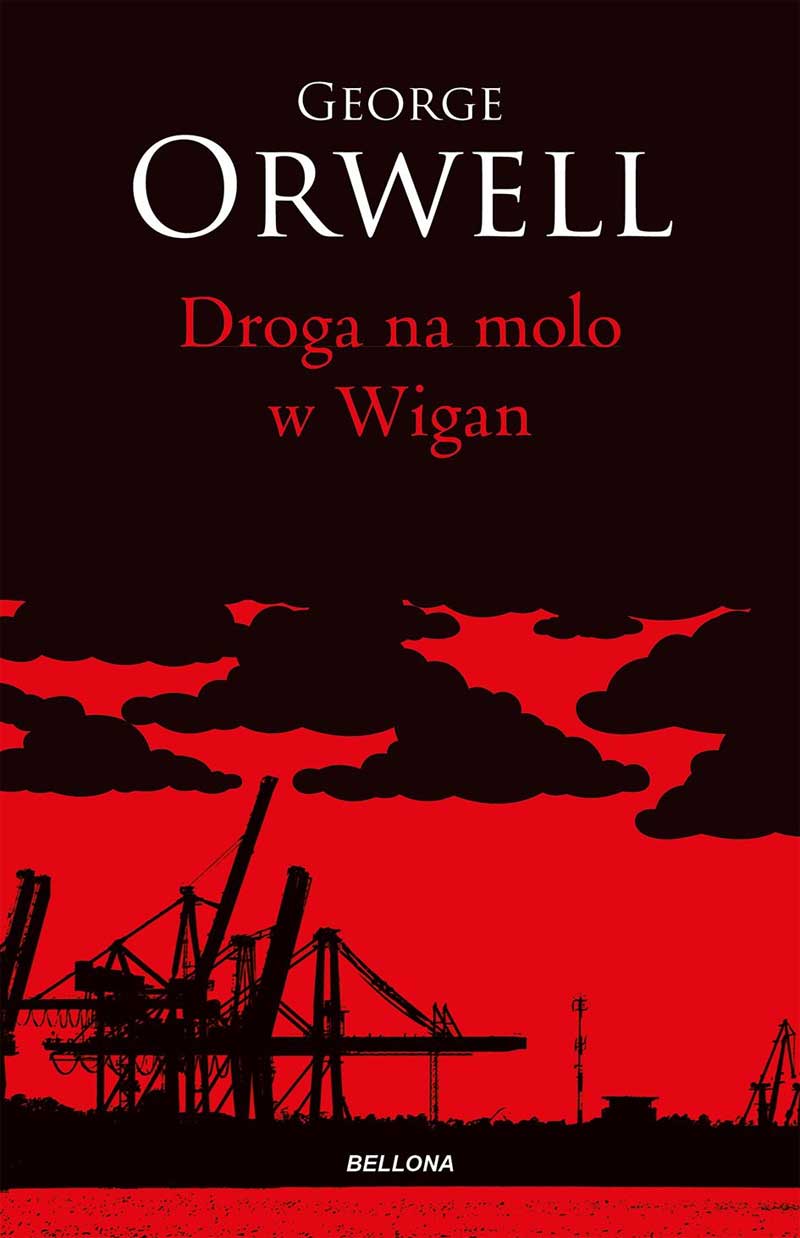

Jim Brown reviewed The Road to Wigan Pier by George Orwell
"You realize momentarily what different universes different people inhabit"
In the 1930s, the Left Book Club commissioned George Orwell to write a book for them. They had more than 38,000 members, and they distributed copies of their chosen book to those members. The books they distributed were special editions for members (the covers read "Left Book Club Edition, Not for sale to the public."
Orwell went into the mines and boarding houses in the North of England to shed light on the horrific conditions of the working class. That's the first half of the book. The second half is primarily Orwell trying to convince Socialists to get serious about the fight against Fascism by worrying less about Left orthodoxy and more about persuading people.
The leaders of Left Book Club weren't super happy with the second half of the book, and a foreword makes this clear. In future editions, they actually cut out the second half.
…
In the 1930s, the Left Book Club commissioned George Orwell to write a book for them. They had more than 38,000 members, and they distributed copies of their chosen book to those members. The books they distributed were special editions for members (the covers read "Left Book Club Edition, Not for sale to the public."
Orwell went into the mines and boarding houses in the North of England to shed light on the horrific conditions of the working class. That's the first half of the book. The second half is primarily Orwell trying to convince Socialists to get serious about the fight against Fascism by worrying less about Left orthodoxy and more about persuading people.
The leaders of Left Book Club weren't super happy with the second half of the book, and a foreword makes this clear. In future editions, they actually cut out the second half.
This book is really worth reading, and I'm planning to read Homage to Catalonia very soon because Orwell went almost directly from the coal mines to fight in the Spanish Civil War. Imagine a contemporary novelist (or any person at all, in fact) following this path.
So many incredible moments in this book about labor, exploitation, automation.
Here's just one:
“Watching coal-miners work, you realize momentarily what different universes different people inhabit. Down there where coal is dug it is a sort of world apart which one can quite easily go through life without ever hearing about. Probably a majirity of people would even prefer not to hear about it. Yet it is the absolutely necessary counterpart of our world above. Practically everything we do, from eating an ice to crossing the Atlantic, and from baking a loaf to writing a novel, involves the use of coal, directly or indirectly. For all the arts of peace coal is needed; if war breaks out it is needed all the more. In time of revolution the miner must go on working or the revolution must stop, for revolution as much as reaction needs coal. Whatever may be happening on the surface, the hacking and shoveling have got to continue without a pause, or at any rate without pausing for more than a few weeks at the most.” (40)