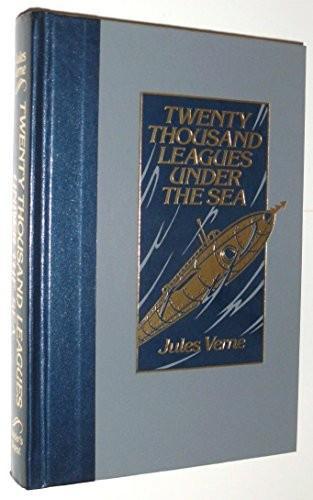

Ji FU reviewed Twenty Thousand Leagues Under the Sea by Jules Verne (Tantor Unabridged Classics)
19th Century Hard Science-Fiction
2 stars
I was somewhat disappointed in 20,000 leagues. It was much more hard science fiction and not so much action adventure. Nothing particularly against hard sci-fi its just not so much my preference. I'm also disappointed not in Verne by any means, but in the public libraries that keep putting these very much adult oriented books in the children's section because they are "classics" which I guess is their way of saying kids should read the classics.
This might be two classic audiobooks in a row that I think the movie was better. Like Black Beauty, the Disney version of 20,0000 Leagues was a childhood favorite of mine. Though I've probably only seen this one a dozen times. In the film it always felt like a surprise around every corner, while in the book it was a scientific discovery. While that's certainly a kind of surprise, it's not giant monster …
I was somewhat disappointed in 20,000 leagues. It was much more hard science fiction and not so much action adventure. Nothing particularly against hard sci-fi its just not so much my preference. I'm also disappointed not in Verne by any means, but in the public libraries that keep putting these very much adult oriented books in the children's section because they are "classics" which I guess is their way of saying kids should read the classics.
This might be two classic audiobooks in a row that I think the movie was better. Like Black Beauty, the Disney version of 20,0000 Leagues was a childhood favorite of mine. Though I've probably only seen this one a dozen times. In the film it always felt like a surprise around every corner, while in the book it was a scientific discovery. While that's certainly a kind of surprise, it's not giant monster attack.
I am sure at its time it was a amazing, but in the 21st century nothing to write home about.