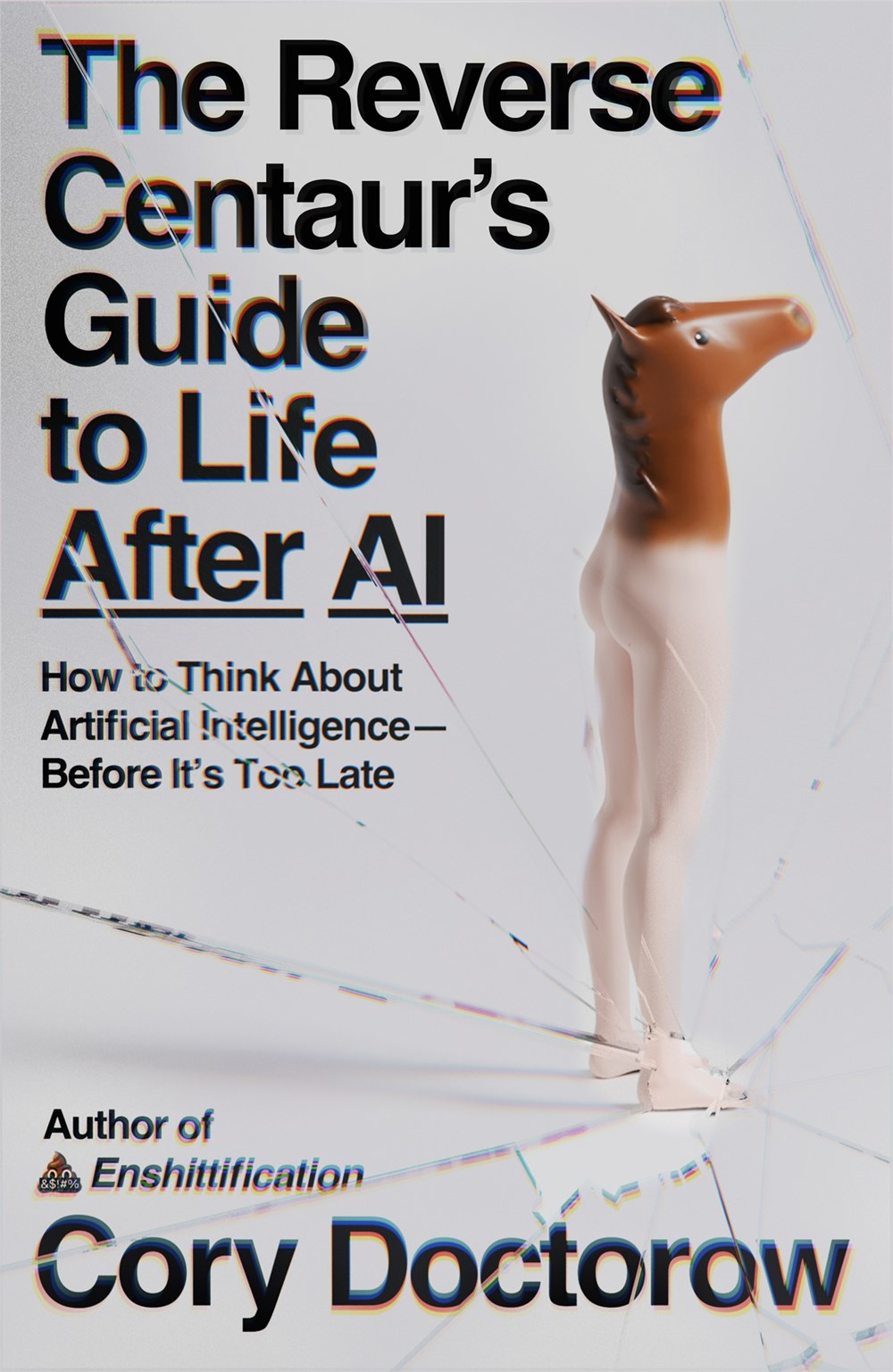
A centaur is a person whose work is assisted by technology, a worker whose tools make them happier and more productive. A reverse centaur, on the other hand, is a worker pressed into service to technology, a person pushed beyond human endurance to work on a machine’s terms. Think of a warehouse worker made to work without food or bathroom breaks, or a programmer made to crank out impossible amounts of code.
There is, to Cory Doctorow, nothing inevitable about the story of AI, about who or what will …
A centaur is a person whose work is assisted by technology, a worker whose tools make them happier and more productive. A reverse centaur, on the other hand, is a worker pressed into service to technology, a person pushed beyond human endurance to work on a machine’s terms. Think of a warehouse worker made to work without food or bathroom breaks, or a programmer made to crank out impossible amounts of code.
There is, to Cory Doctorow, nothing inevitable about the story of AI, about who or what will play which roles. He thinks the technology is useful, even exciting. But AI has arrived surrounded by unprecedented hype, preordained as a world-changing disruption that defies all rational evaluation. Doctorow seeks to puncture that bubble before it’s too late, to help us understand the technology not just for what it actually does—though that, of course, is important—but who it does it to and who it does it for.
From that point of view, the story of AI is indeed dramatic and unprecedented, though it is not the version of the story we have been commonly told. In The Reverse Centaur’s Guide to Life After AI—as he did so successfully in Enshittification—Doctorow recounts both how we found ourselves in this situation and how we can get through it, to a life “after” AI in which the tools work for us, not the other way around.
Doctorow makes an excellent argument about the economic harm of AI and how it can be terrible for workers. His approach of discussing who AI does things for and to who works for his argument, but a lot of the harms of AI aren't given much time in this book. Doctorow is always witty and delivers superbly researched material, but I feel like there's more book we missed out on because of the lens he chose to use.